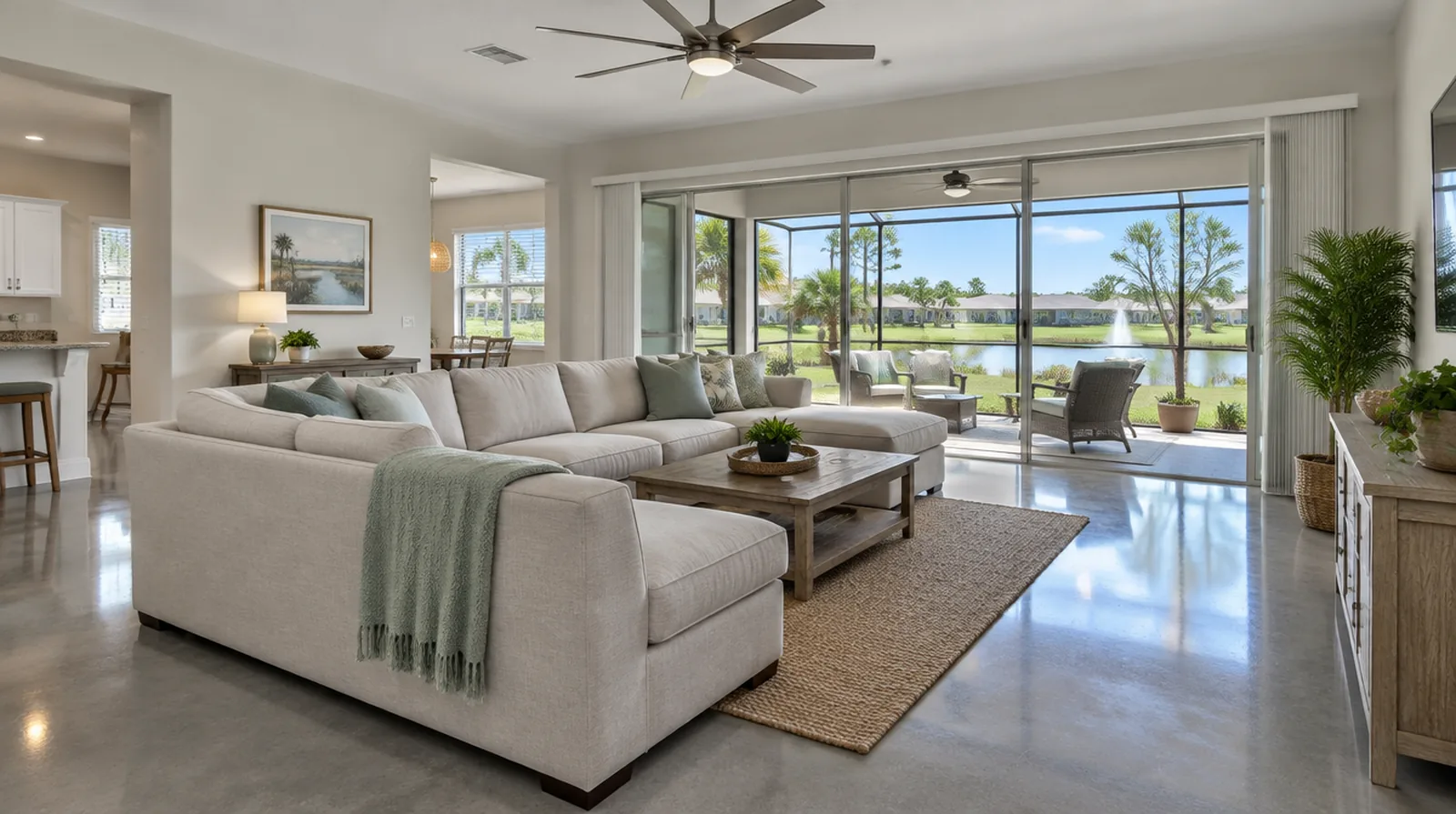
What polished concrete is
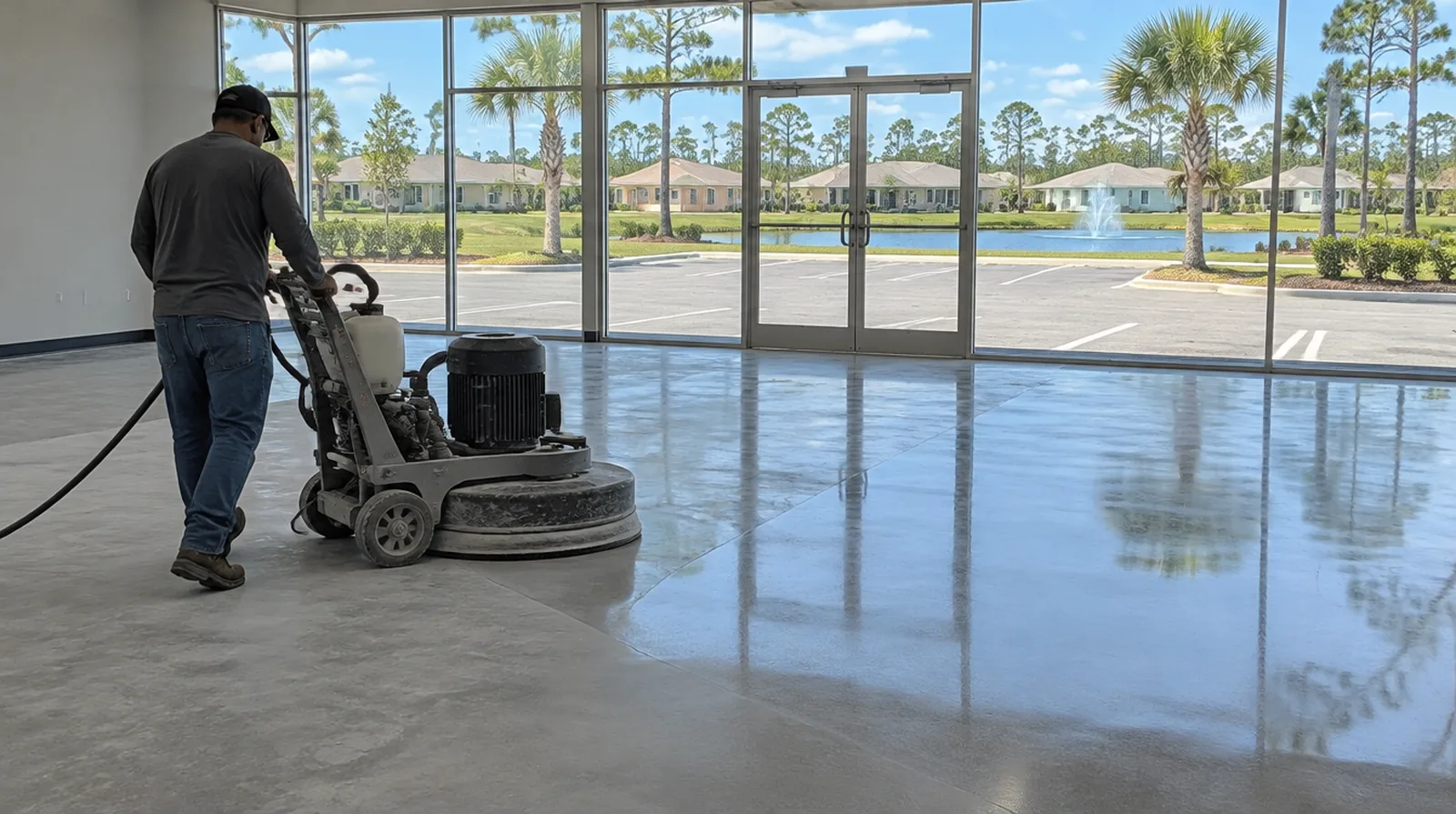
Polishing uses progressively finer diamond tools to grind and hone the concrete surface. A chemical densifier hardens the slab, and the final passes create the sheen. There is no film to peel. The finish can range from matte to mirror-like, and it is very durable.
Why it fits Florida living
Polished concrete stays cool, does not trap allergens like carpet and resists humidity better than many floor coverings. It is popular in remodels where homeowners pull up old tile or carpet and want a modern look.
Residential projects
Many homes here have slab foundations, so the concrete under old flooring can often be polished. We remove adhesive and tack strips, fill holes and test small areas to show the result. Some slabs reveal interesting aggregate and character; others have patches that we can blend or tint.
Commercial projects
Retail stores, offices, gyms and churches choose polished concrete because it handles heavy foot traffic and needs little maintenance. It reflects light, brightening interiors and potentially reducing lighting needs.
Finish levels
- Cream polish keeps the surface paste with minimal aggregate.
- Salt and pepper exposes fine aggregate for subtle texture.
- Exposed aggregate shows larger stones for a terrazzo-like look.
Color and stain options
Dyes and stains can be added for warmth or brand colors. A protective guard enhances stain resistance.
Maintenance
Dust mop daily in busy spaces and clean with a neutral cleaner. Periodic burnishing restores sheen.
Limitations
Polishing cannot hide all slab imperfections. Cracks and patches remain visible, though they can be filled. Outdoor polished concrete can be slippery when wet, so we usually recommend sealing outdoors instead.
Questions
How long does it take?
Most rooms take one to three days depending on size and finish.
Is it dusty?
We use dust extraction and wet methods to control dust.
Is it slippery?
Polished concrete indoors is usually not slippery when dry and clean.
Explore polished concrete
Contact us for a test area, or read about metallic epoxy for a different look.
From tile removal to finished floor
Removing old tile is often the first step in a polished concrete remodel. Thinset mortar left behind can be stubborn, and some older adhesives are black and tar-like. We grind these away with aggressive tooling and dust extraction, then evaluate what remains. Tile removal sometimes leaves shallow divots or exposes old plumbing trenches filled with mismatched concrete. We fill and blend those areas as well as possible, and we show you a sample before polishing the whole room so you know what the finished floor will look like. Many homeowners decide they love the honest character of the slab, while others choose a tinted guard to soften variations. Either way, polished concrete is one of the most practical floors for a humid climate, with nothing to mold or rot and no seams to trap dirt.
Pairing polish with rugs and furniture
Polished floors work well with area rugs, which add softness and reduce echo in open rooms. Felt pads on chair and table legs prevent scratches, and a door mat at each entry catches the sand that would otherwise dull the finish.
Cost compared with other floors
Because polishing uses the existing slab, it often costs less than new tile, wood or luxury vinyl. Long-term, there is little to replace, no grout to scrub and no wax to strip, which keeps upkeep simple.
Test patches are included with every estimate visit.
Get a polishing quote
Call (863) 313-1110 for a free estimate.