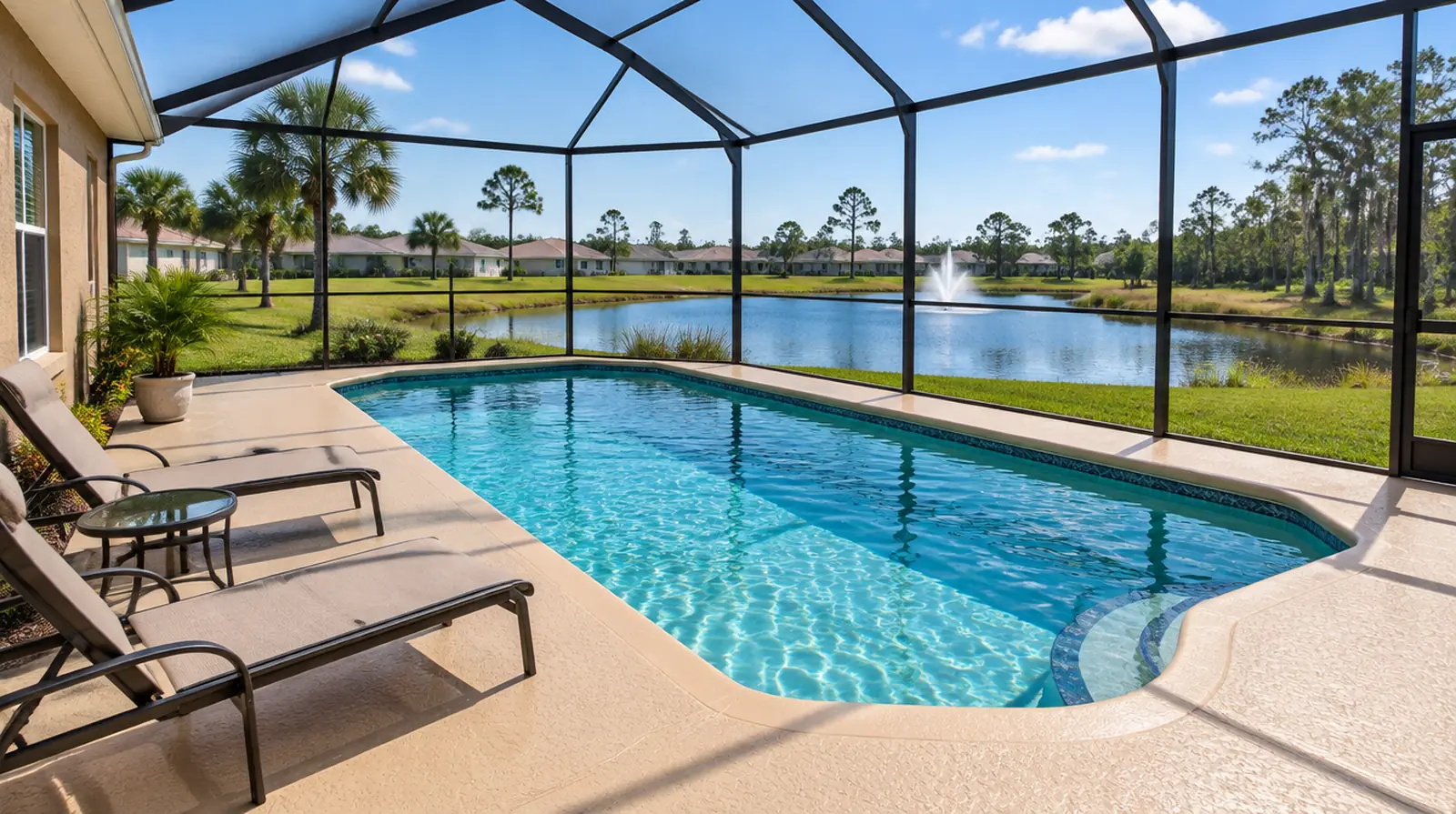
Why seal outdoor concrete
Constant humidity, rain and irrigation keep outdoor concrete damp. That leads to mildew, algae and staining. Irrigation from well water causes orange rust streaks. Sun fades color and wears the surface. Sealing reduces water absorption and makes cleaning easier.
Types of sealers
Penetrating sealers
Silane and siloxane products soak in and repel water without changing appearance or making surfaces slick.
Acrylic sealers
Film-forming sealers enhance color and sheen, ideal for decorative surfaces. They need periodic recoating.
Urethane and polyaspartic sealers
Tough films for high-traffic patios and lanais, with grit for traction.
Preparation
We clean thoroughly, treat mildew and rust, and allow concrete to dry before sealing. Timing matters during the rainy season.
Pool decks
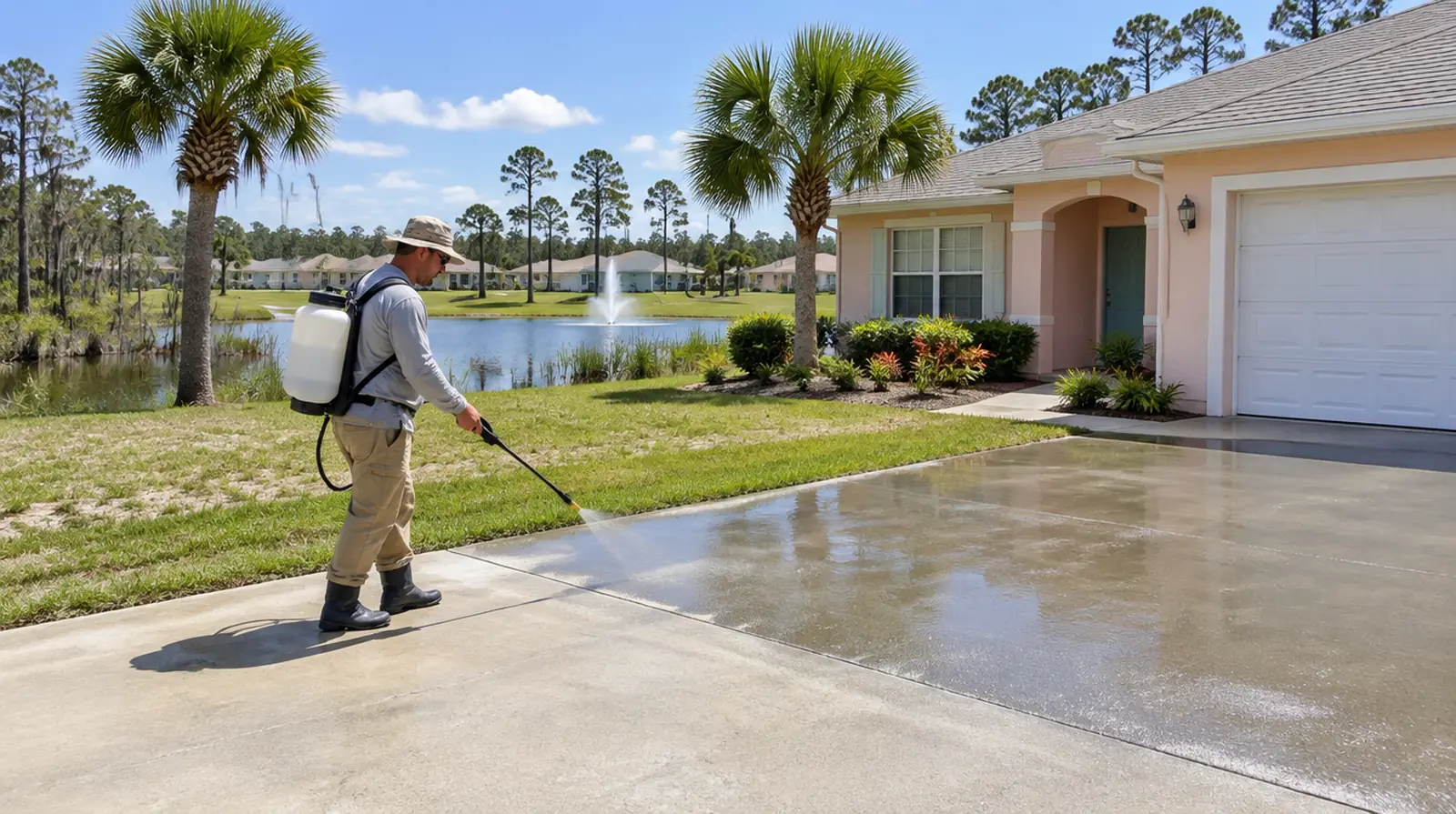
Pool decks need sealers that resist chlorine and stay slip-resistant. We can refresh color and seal with traction additives.
Lanais and walkways
Screened lanais and front walks benefit from sealing to reduce stains and keep surfaces clean.
Driveways
Sealing driveways helps prevent oil and rust stains and keeps them looking newer.
Maintenance
Penetrating sealers last several years; acrylics may need recoating every two to three years. We recommend routine washing.
Questions
Will sealing change the look?
Penetrating sealers keep a natural look; acrylics add sheen.
Can you remove rust stains?
Many can be reduced with specialty cleaners.
How long until use?
Usually a few hours for foot traffic.
Seal your concrete
Contact us for a quote, or see driveway coating.
Retention ponds and irrigation
Most neighborhoods here drain into retention ponds, and many irrigation systems pull from wells or reclaimed water. Both leave mineral deposits on concrete. Reclaimed water can leave white crust, while well water leaves orange iron stains that creep across walkways and driveways. We clean these deposits with the right chemistry before sealing, and we recommend adjusting sprinkler heads so they water lawns instead of concrete. After sealing, deposits rinse off more easily and do not soak deep into the surface.
Screened lanais and mildew
Screened enclosures keep bugs out but also trap shade and humidity. Lanai floors often grow a gray film of mildew along the edges where sun rarely reaches. A penetrating sealer reduces moisture in the surface, which slows that growth. For lanais that will be used as outdoor living rooms, a coated flake or textured finish gives a cleaner, more finished look and is easier to keep fresh. We take care to protect screen walls, pool equipment and furniture while we work.
Sealing new concrete
New patios, extensions and walks should cure for about a month before sealing. Sealing at the right time helps the slab resist early staining from leaves, rust and pool chemicals. We can return after the cure period to clean and seal, and we leave a simple care sheet so you know how to keep the surface looking fresh.
Ask about bundling several surfaces for one visit.
Commercial sidewalks and entries
Businesses benefit from sealed entries and sidewalks, which resist gum, drink spills and tire marks from carts. A clean entrance makes a good first impression. We can seal storefront walks overnight so they are dry before opening. Dumpster pads and loading areas can also be sealed to resist grease and make pressure washing faster. Ask us to include these spots when we visit for interior work.
We also note any cracks or trip hazards we find and can repair them before the sealer goes down, so the surface is safer and looks more uniform.
Get a sealing quote
Call (863) 313-1110 for a free estimate.